
District Overview
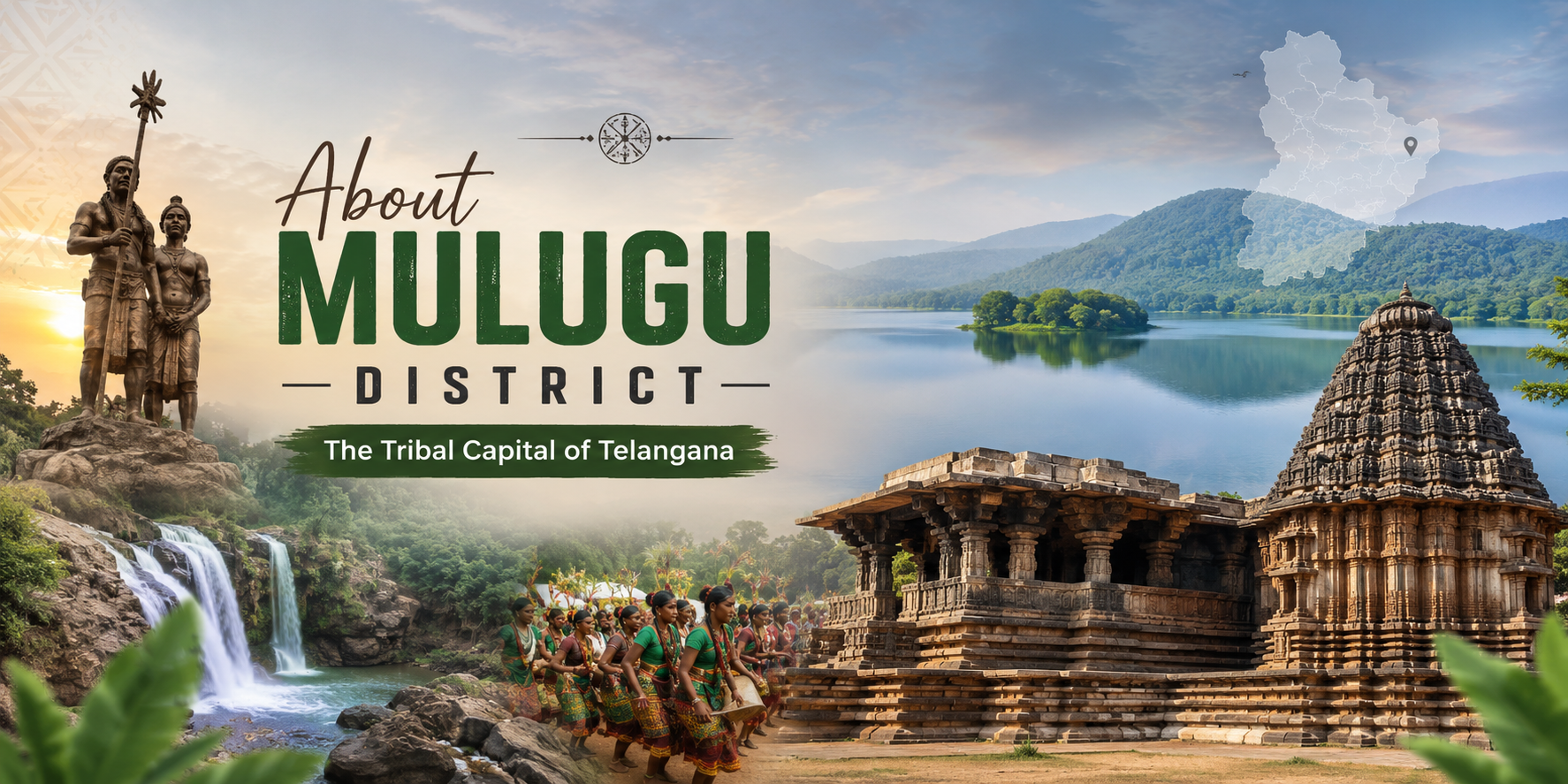
Mulugu District is one of the newest districts in the state of Telangana, formed on 17 February 2019. Located in the eastern part of the state, Mulugu is renowned for its rich tribal heritage, dense forests, historical monuments, scenic lakes, and waterfalls. The district serves as a gateway to Telangana’s natural and cultural treasures and is often referred to as the tribal heartland of the state.
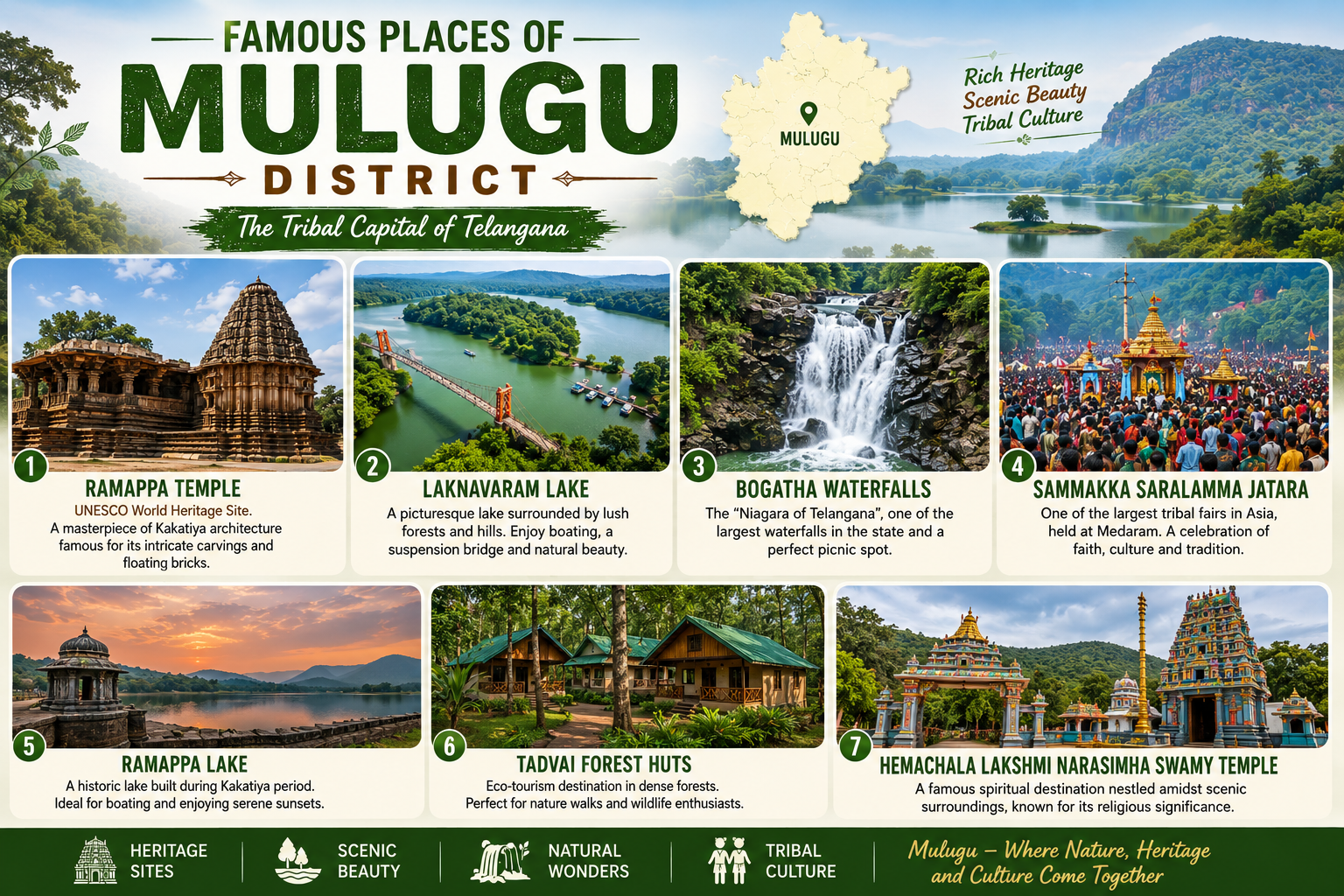
The district is home to the world-famous Sammakka Saralamma Jatara (Medaram Jatara), one of the largest tribal festivals in India. Mulugu also boasts several popular tourist attractions, including the UNESCO World Heritage Site Ramappa Temple, the picturesque Laknavaram Lake, and the stunning Bogatha Waterfall, often called the “Niagara of Telangana.”
Mulugu District
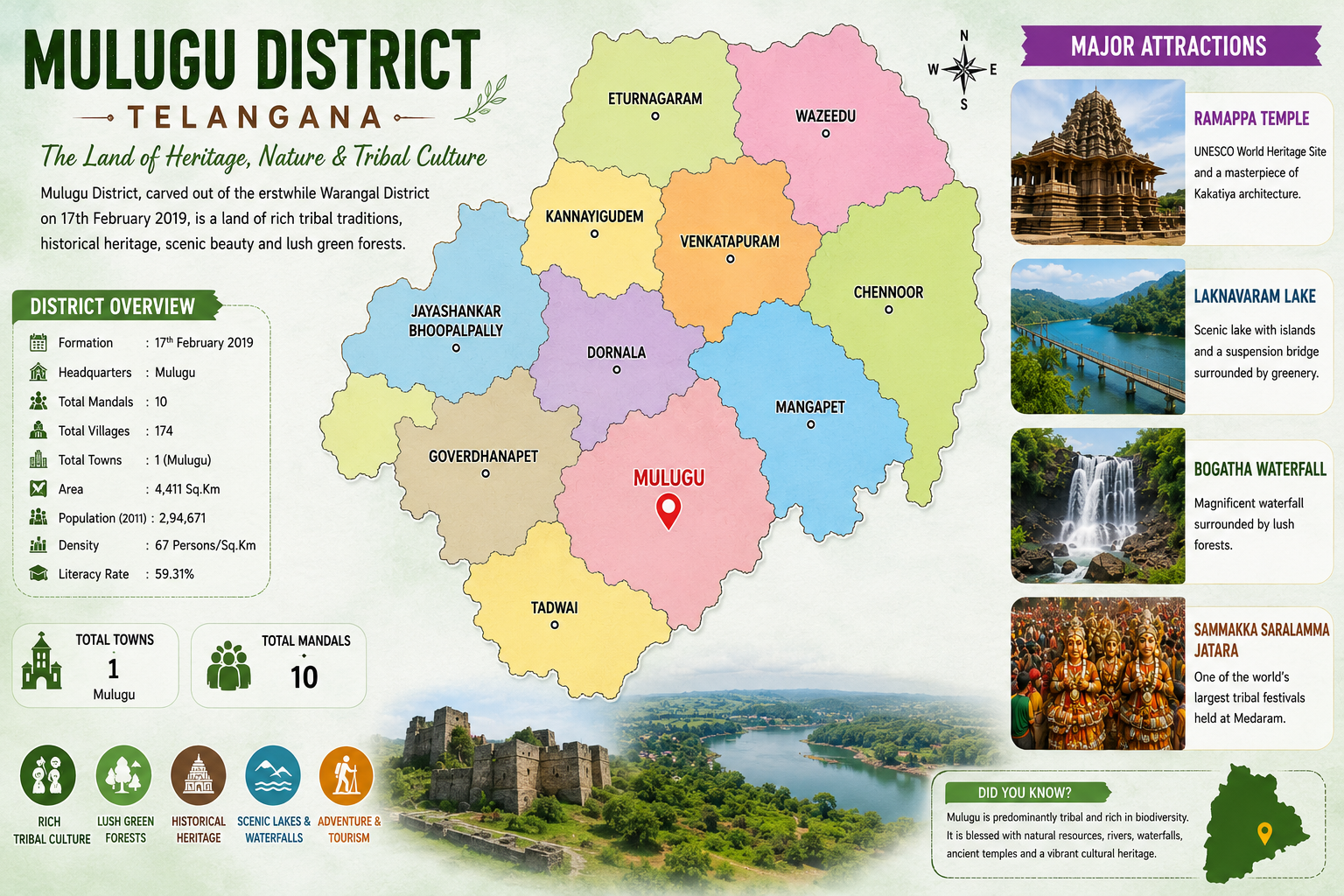
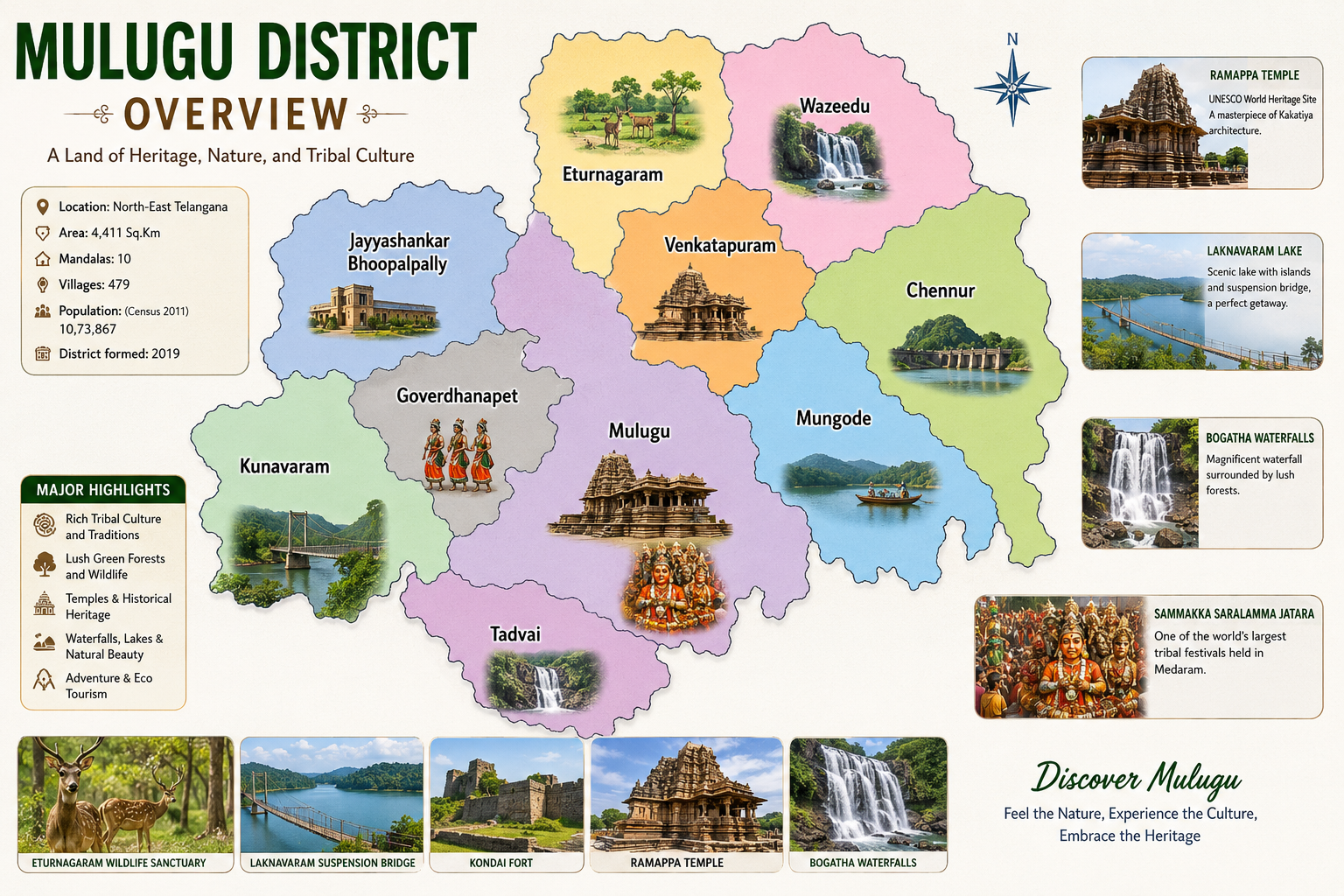
Mulugu District, located in the northeastern part of Telangana, is predominantly rural and tribal in nature. The district has only one urban town, Mulugu, which serves as the district headquarters and administrative center. The remaining areas consist of villages spread across various mandals, surrounded by forests, rivers, and natural landscapes.
Mulugu Town acts as the administrative, commercial, and transportation hub of the district. It provides access to several renowned tourist attractions and cultural landmarks. The town plays a vital role in promoting tourism, education, healthcare, and government services for the surrounding rural and tribal communities.
Formation of Mulugu District
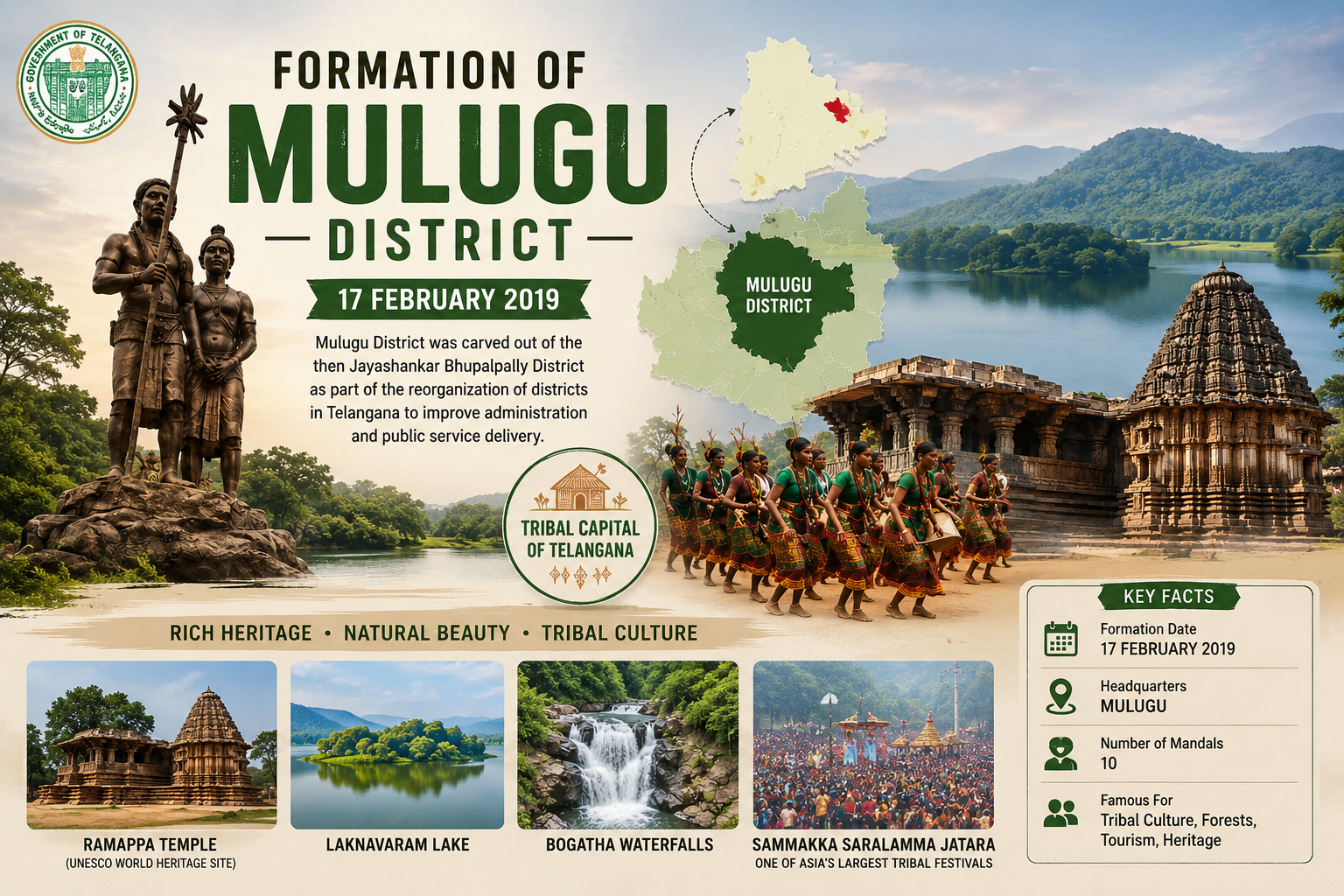
Mulugu District was officially formed on 17 February 2019 as part of the administrative reorganization of districts in Telangana. The district was carved out of the former Jayashankar Bhupalpally District to improve governance, administration, and public service delivery in the region.
Mulugu was established with its headquarters at Mulugu town and is known for its vast forest cover, tribal heritage, historical monuments, and natural attractions. The district is home to several tribal communities and is often referred to as the “Tribal Capital of Telangana.”
Population Overview
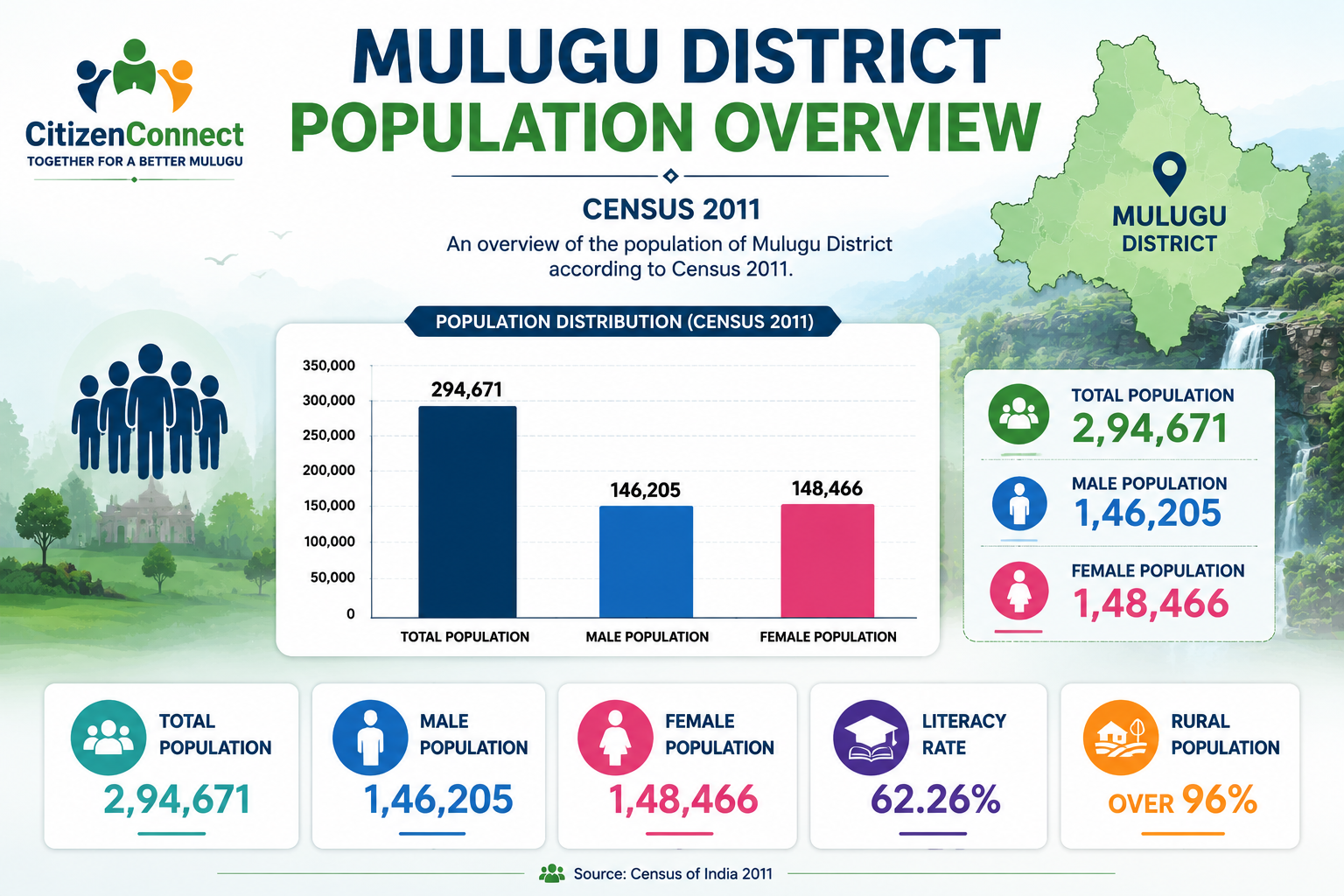
- Total Population: 2,94,671
- Male Population: 1,46,205
- Female Population: 1,48,466
- Sex Ratio: 1,015 females per 1,000 males
- Literacy Rate: 62.26%
- Rural Population: More than 96%
- District Headquarters: Mulugu
- State: Telangana
- District Headquarters: Mulugu
- State: Telangana
- Formation Year: 2019
- Area: Approximately 4,092 sq. km
- Major Attraction: Bogatha Waterfall
- Famous Festival: Sammakka Saralamma Jatara
- Major Forest Area: Eturnagaram Wildlife Sanctuary
Population
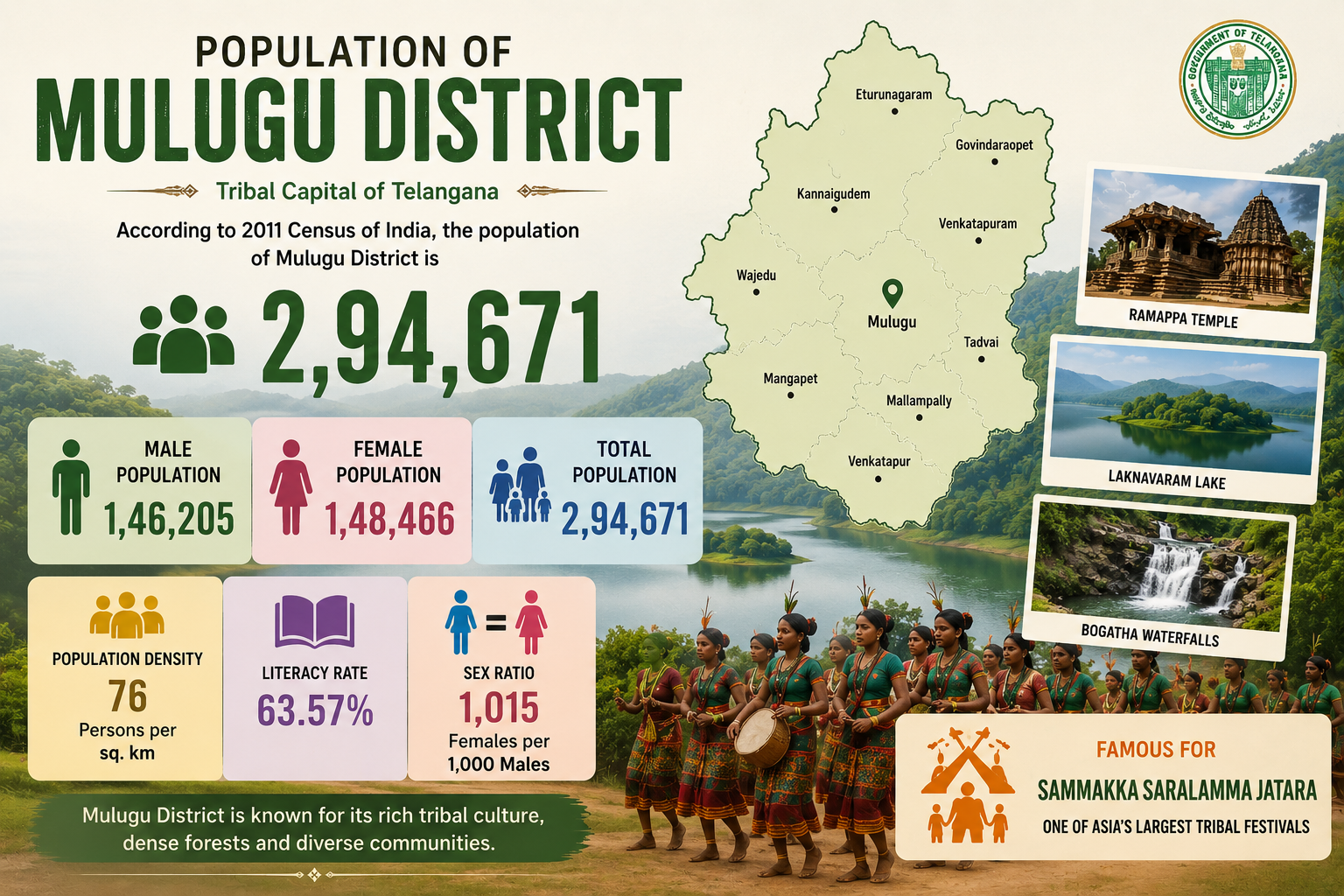
Mulugu District has a population of approximately 2.95 lakh people, as per the 2011 Census. The district is characterized by a significant tribal population and a rich cultural heritage. Despite its vast geographical area and dense forest cover, Mulugu maintains a balanced population distribution with a favorable sex ratio and steadily improving literacy levels. The district’s diverse communities contribute to its unique cultural identity and social development.
Measurements
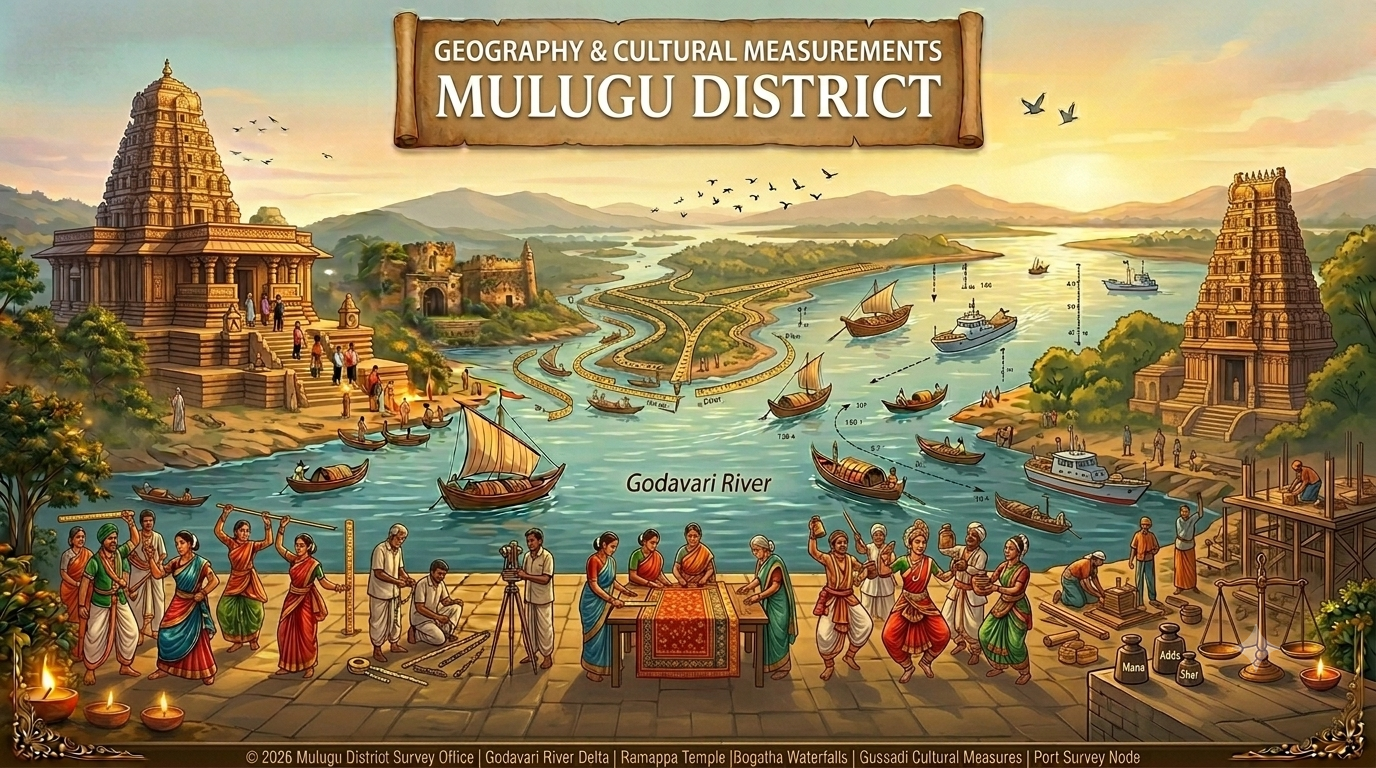
- Total Area: 3,881 sq. km
- Elevation: 177 meters above sea level
- Total Population: 2,94,671
- Male Population: 1,46,205
- Female Population: 1,48,466
- Population Density: 76 persons per sq. km
- Literacy Rate: 63.57%
- Male Literacy Rate: 73.49%
- Female Literacy Rate: 53.83%
- Revenue Division: 1
- Revenue Mandals: 10
- Village Panchayats: 174
- Major Language: Telugu
- District Headquarters: Mulugu
- Formation Date: 17 February 2019
Agriculture
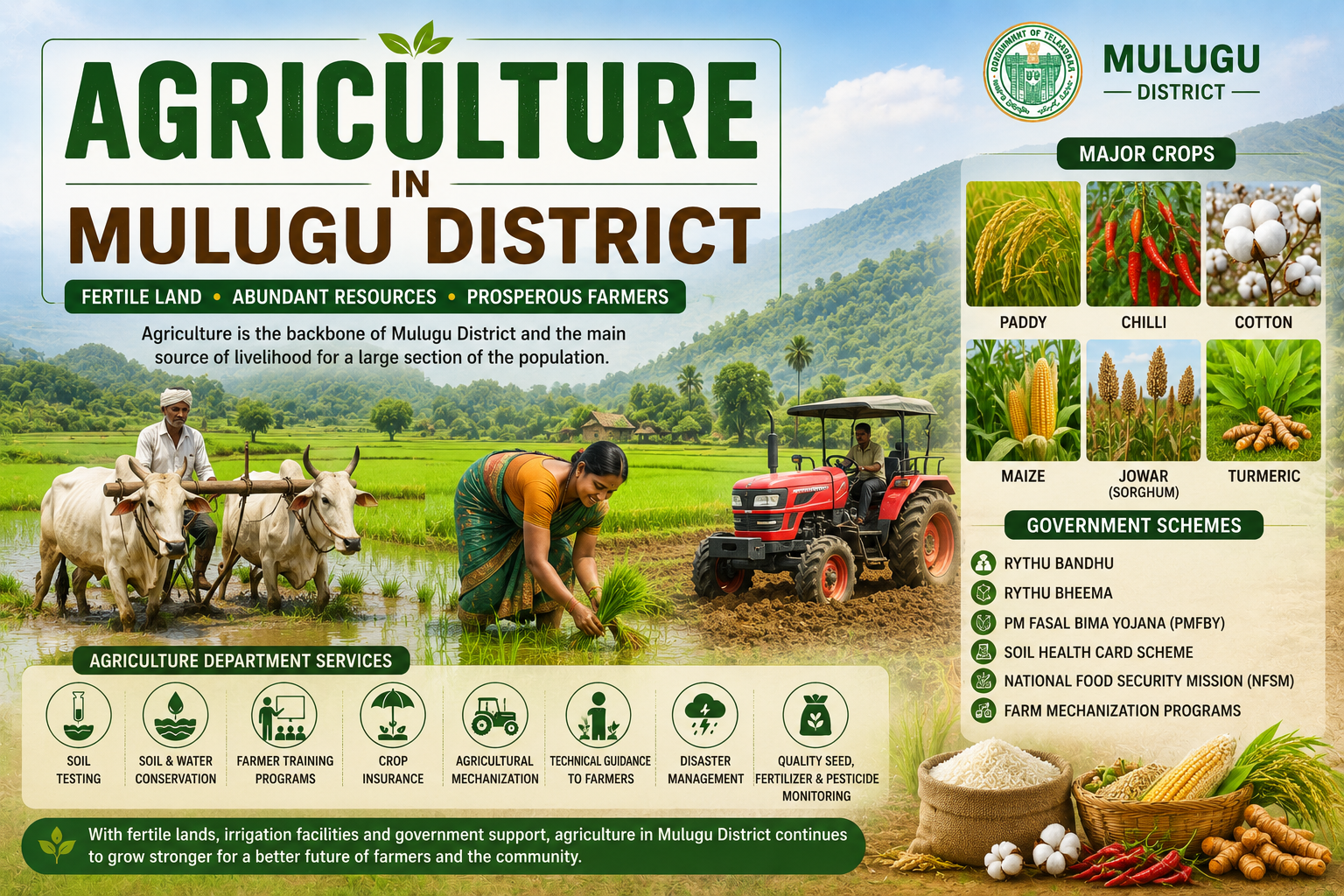
Agriculture is the backbone of Mulugu District’s economy and provides livelihood opportunities to a large section of the population. The district is known for the cultivation of paddy, chilli, cotton, maize, and turmeric. With its fertile lands, favorable climate, and government support programs, agriculture continues to play a vital role in the socio-economic development of the district. Various agricultural schemes, modern farming techniques, and farmer welfare initiatives are helping improve productivity and sustainability across Mulugu District.
The district’s rich natural environment and favorable climatic conditions contribute to sustainable farming practices. In addition to crop cultivation.
Famous Places
A UNESCO World Heritage Site, this magnificent Kakatiya-era temple is renowned for its intricate carvings, floating bricks, and remarkable architecture. It is one of the most visited heritage monuments in Telangana.
Surrounded by lush forests and hills, Laknavaram Lake is famous for its scenic beauty, suspension bridge, boating facilities, and peaceful environment.
Historical Heriage of Mulugu
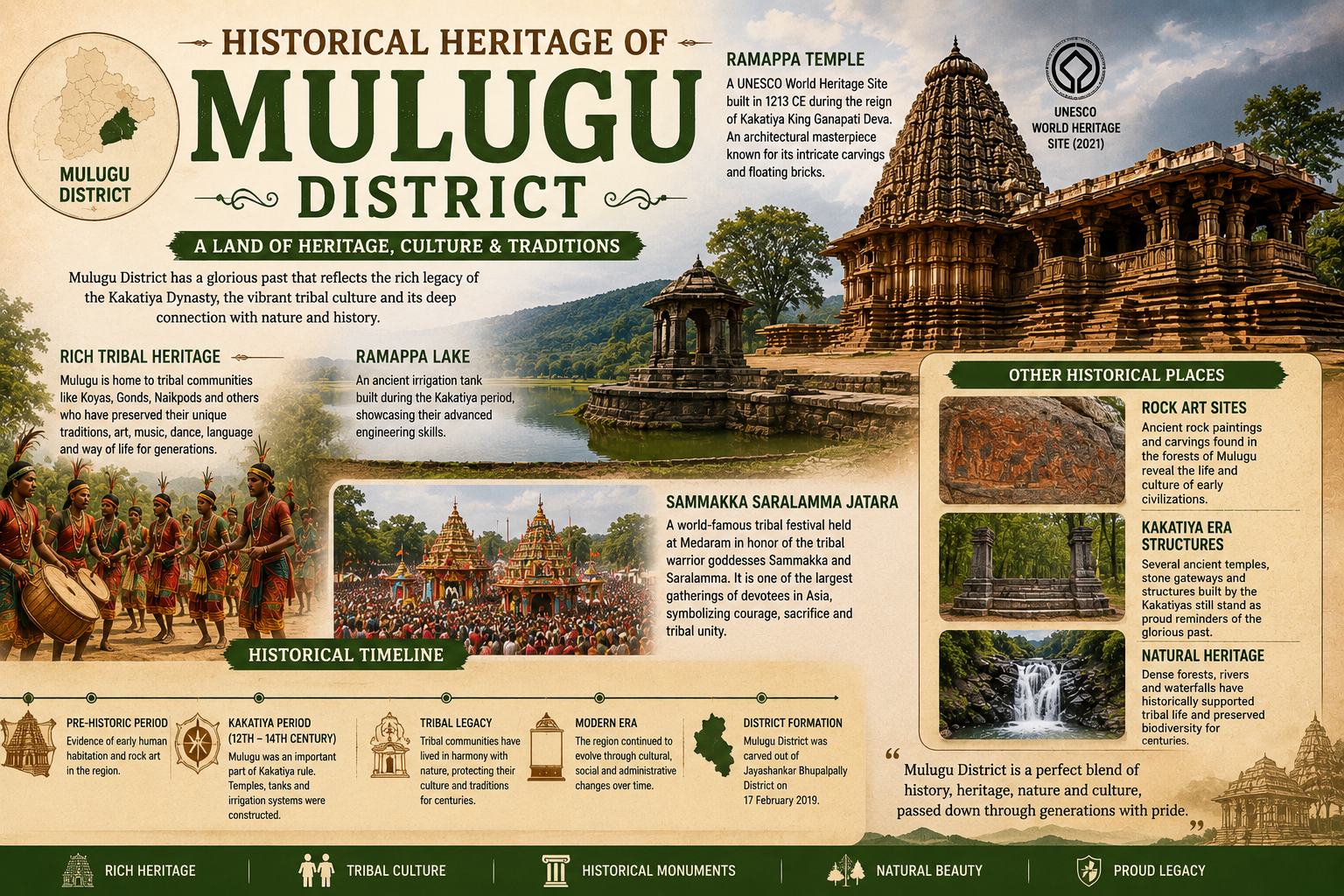
The district is home to the famous Ramappa Temple, constructed in 1213 CE during the reign of Kakatiya ruler Ganapati Deva. Known for its intricate carvings, floating bricks, and exquisite craftsmanship, the temple was recognized as a UNESCO World Heritage Site in 2021.
Mulugu has long been inhabited by tribal communities such as the Koyas, Gonds, and Naikpods. These communities have preserved their unique traditions, customs, and cultural practices for generations.
Timeline with Mulugu
Mulugu District was officially formed on 17 February 2019 as part of the administrative reorganization of districts in Telangana. The district was carved out of the former Jayashankar Bhupalpally District to improve governance, administration, and public service delivery in the region.
Mulugu District has a population of approximately 2.95 lakh people, as per the 2011 Census. The district is characterized by a significant tribal population and a rich cultural heritage. literacy levels. development.
Agriculture is the backbone of Mulugu District’s economy and provides livelihood opportunities to a large section of the population. The district is known for the cultivation of paddy, chilli, cotton, maize, and turmeric. With its fertile lands, favorable climate, and government support programs, agriculture continues to play a vital role in the socio-economic development of the district. Various agricultural schemes, modern farming techniques, and farmer welfare initiatives are helping improve productivity and sustainability across Mulugu District.
The district’s rich natural environment and favorable climatic conditions contribute to sustainable farming practices. In addition to crop cultivation.
A UNESCO World Heritage Site, this magnificent Kakatiya-era temple is renowned for its intricate carvings, floating bricks, and remarkable architecture. It is one of the most visited heritage monuments in Telangana.