Bogatha Waterfall
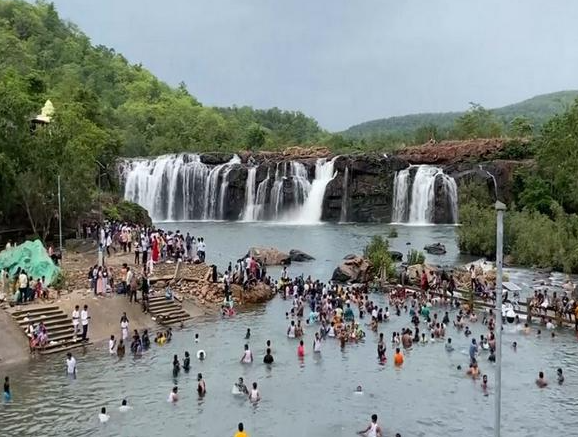
Bogatha Waterfall is a scenic waterfall in the forested landscapes of Mulugu district, Telangana, formed by the Cheekupally stream. Often nicknamed the “Niagara of Telangana”, it is one of the state’s largest and best-known waterfalls, attracting visitors for its broad cascade, lush surroundings, and monsoon scenery. Bogatha Waterfall is celebrated for its wide curtain of water rather than extreme height, creating an impressive spectacle during the rainy season. Located near Vajedu (Wazeedu) Mandal, it is surrounded by dense forests close to the Telangana–Chhattisgarh border, making it a popular destination for nature lovers, photographers, and road-trip enthusiasts.The best season is from June to November, especially after the monsoon when water flow is at its strongest. Visitors typically park nearby and complete a short walk or trek to reach the falls. The area includes viewpoints and open spaces for enjoying the landscape, though conditions can become slippery during periods of heavy rain.
Ramappa Temple
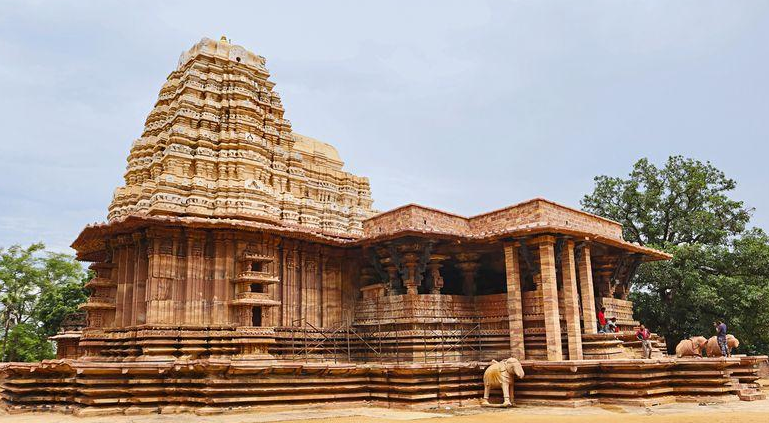
Ramappa Temple, formally known as the Kakatiya Rudreshwara Temple, is a 13th-century Shiva temple located in Palampet village of Mulugu district, Telangana. It is one of India’s finest examples of Kakatiya architecture and gained international recognition when UNESCO inscribed it as a World Heritage Site in 2021 for its artistic excellence and innovative engineering. Construction of the temple began in 1213 CE during the reign of Kakatiya ruler Ganapati Deva and was commissioned by his general, Recharla Rudra. Although dedicated to Shiva, the temple is popularly known as “Ramappa Temple” after its chief sculptor or architect, Ramappa—an unusual distinction in India, where temples are rarely named after their craftsmen.
Laknavaram Lake
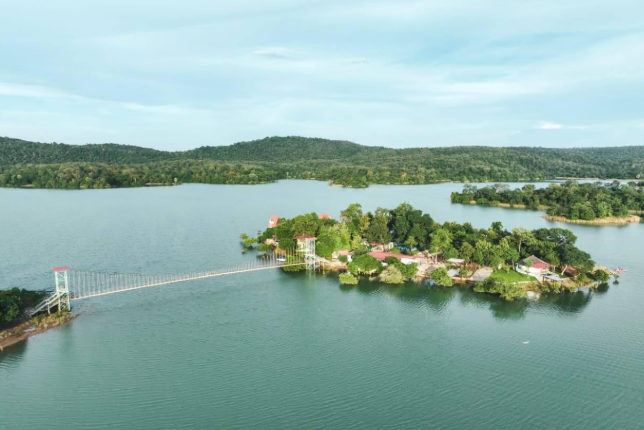
Laknavaram Lake is a scenic man-made lake in Mulugu District, Telangana, surrounded by forested hills and dotted with numerous small islands. Originally developed during the Kakatiya era as an irrigation reservoir, it is now one of Telangana’s most recognizable nature destinations, known for its long suspension bridge, boating facilities, and tranquil landscape.The lake traces its origins to the Kakatiya dynasty in the 13th century. Historical records indicate that the Kakatiya rulers expanded a natural water body into a large reservoir to support irrigation, and it continues to serve agricultural areas in the region. A defining feature of Laknavaram Lake is its hanging suspension bridge, which stretches roughly 160 meters and links the mainland with island sections within the lake. The bridge offers panoramic views of the surrounding water, hills, and islands, making it the most photographed part of the destination.
Medaram
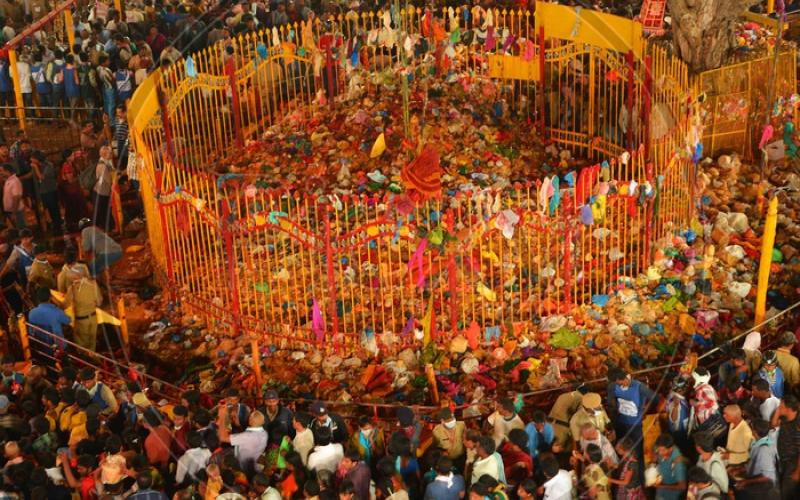
Medaram is a small forest village in Medaram that is renowned as the site of the Sammakka–Saralamma Jatara, one of India’s largest tribal religious gatherings. Although quiet for much of the year, it becomes a major pilgrimage destination during the biennial festival, attracting millions of devotees from Telangana and neighboring states.Medaram is deeply associated with the worship of the tribal warrior goddesses Sammakka and Saralamma, who are revered by the Koya community. According to local tradition, the festival commemorates their resistance against injustice and their sacrifice in defense of their people, making the site an important symbol of tribal heritage and identity. The biennial, four-day Jatara is the main reason Medaram is internationally known. During the festival, the deities are ceremonially brought to sacred platforms
Eturnagaram Wildlife Sanctuary
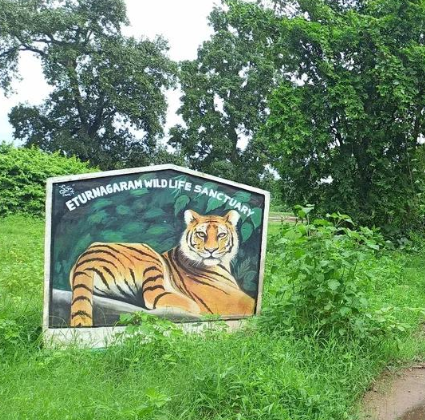
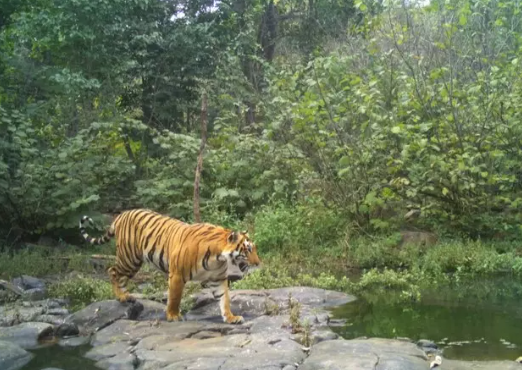
Eturnagaram Wildlife Sanctuary is one of Telangana’s oldest protected forest areas, located in the state’s northeastern dry deciduous forest belt. Established in 1952, it covers about 812 sq km and is recognized for its rich biodiversity, scenic riverine landscapes, and ecological importance near the Telangana–Maharashtra–Chhattisgarh border. The sanctuary lies along the Godavari River, with the perennial Dayyam Vagu stream dividing parts of the forest. Its landscape consists of undulating hills, valleys, teak and bamboo forests, and mixed tropical dry deciduous vegetation, creating habitats for a wide variety of wildlife throughout the year. Large mammals found in the sanctuary include tigers, leopards, sloth bears, gaur, nilgai, sambar, chital, and the distinctive four-horned antelope (chousingha). The forests also support numerous bird species, reptiles, and smaller mammals, making the area popular with birdwatchers and wildlife enthusiasts. Beyond its ecological value, the sanctuary is closely associated with the Sammakka–Saralamma Jatara, one of Asia’s largest tribal festivals, which takes place in the forest region. Indigenous communities, including the Koya people, have long-standing cultural connections with these forests, making the sanctuary an important landscape for both biodiversity conservation and cultural heritage.
Tadvai Forest
Tadvai Forest is a scenic forest destination in the Tadvai Forest within the larger Eturnagaram Wildlife Sanctuary. Known for its dense teak forests, rich birdlife, and eco-tourism facilities, it is one of Telangana’s best-known nature escapes and serves as a gateway to exploring the state’s eastern forest landscapes. The forest is characterized by dry deciduous woodland, with towering teak trees, bamboo, and diverse native vegetation. The Telangana Forest Department has developed Tadvai Forest Huts, allowing visitors to stay inside the forest in simple eco-friendly accommodations. Nature walks, cycling, birdwatching, and forest drives are among the most popular activities. Tadvai lies within one of Telangana’s oldest protected forest regions, supporting wildlife such as gaur (Indian bison), sloth bears, sambar deer, cheetal, giant squirrels, numerous reptiles, and a wide variety of resident and migratory birds.
Pandavula Guttalu
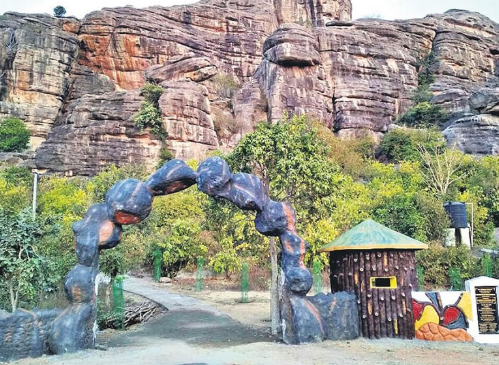
Pandavula Guttalu is a remarkable complex of sandstone hills, caves, and prehistoric rock art in eastern Telangana. Although often associated with the broader Mulugu region by travelers, the site is located near Thirumalagiri in present-day Jayashankar Bhupalpally district, close to the Mulugu district boundary, following Telangana’s district reorganization. It is one of the state’s most significant archaeological and geological heritage attractions. The hillocks preserve prehistoric rock paintings created over many phases of human occupation, from the Stone Age into later historical periods. The artwork depicts animals such as deer, tigers, peacocks, fish, and reptiles, along with human figures, hunting scenes, handprints, and geometric motifs painted in red, white, yellow, and green pigments. The site also contains later inscriptions, including those from the Rashtrakuta period, making it valuable for understanding thousands of years of cultural history.
Mallur
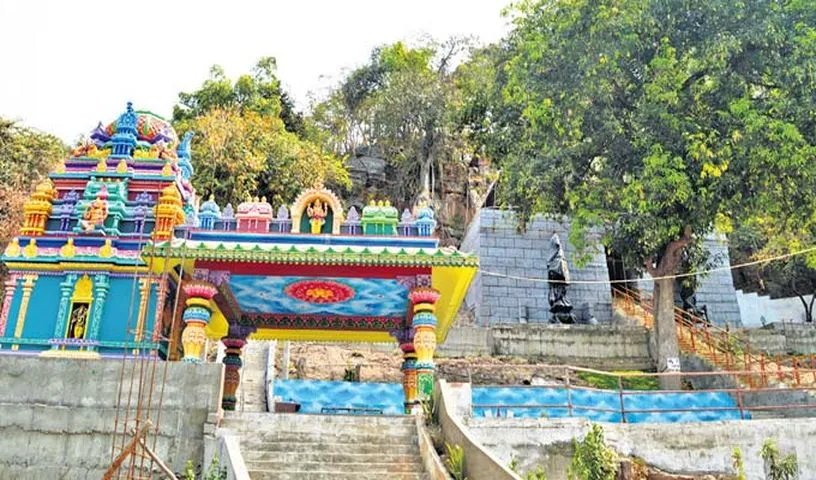
Mallur is a forested pilgrimage destination in Mallur, best known for the ancient Sri Hemachala Lakshmi Narasimha Swamy Temple. Surrounded by the forests of the Mulugu region, it attracts devotees and visitors seeking both its spiritual importance and its natural setting. The main attraction is the Sri Hemachala Lakshmi Narasimha Swamy Temple, dedicated to Lord Narasimha, an incarnation of Vishnu. The temple is especially renowned for its approximately 10-foot-tall main deity (Moolavirat). According to long-standing local tradition, the deity’s abdominal area feels unusually soft, a feature regarded by devotees as miraculous and one of the temple’s defining characteristics. These beliefs are part of the temple’s religious heritage rather than scientifically established facts.
Damaravai Megalithic Dolmens
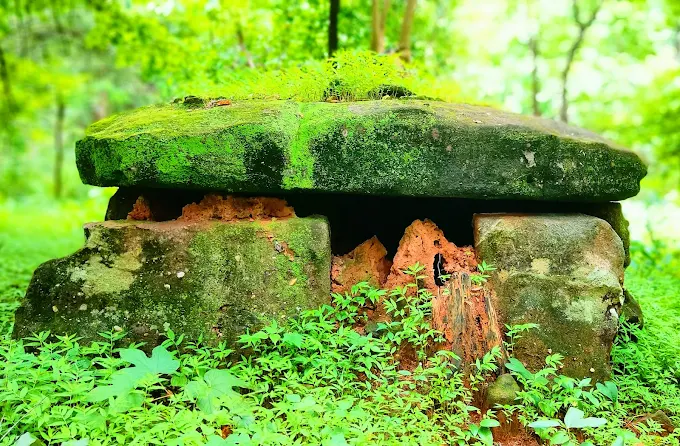
The Dameravai Dolmen Burials are a prehistoric megalithic burial site near Dameravai village in Telangana’s Mulugu district. The monument is one of the state’s most significant collections of ancient stone burial chambers and provides valuable evidence of Iron Age communities and their funerary traditions in the Godavari forest region. The site consists primarily of dolmens and dolmenoid cists—burial monuments built from massive sandstone slabs, usually with four upright stones supporting a heavy capstone. Archaeologists generally date the megalithic culture represented here to roughly 1000 BCE–300 BCE, although individual monuments may vary in age. Excavations and surveys have found pottery fragments, iron objects, and other remains associated with ancient burial practices.
Kaleshwaram
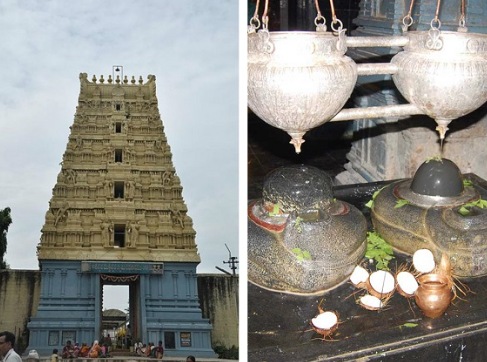
Kaleshwaram is a renowned pilgrimage destination in the Jayashankar Bhupalpally district of Telangana, best known for the ancient Kaleshwara Mukteshwara Swamy Temple dedicated to Lord Shiva. Located near the confluence of the Godavari and Pranahita rivers, it is one of Telangana’s most important Shaivite sacred sites and attracts large numbers of devotees throughout the year. The temple is distinctive because its sanctum contains two lingams on a single pedestal (Panavattam)—one representing Mukteshwara (Shiva) and the other Kaleshwara, traditionally associated with Yama. This uncommon arrangement gives the temple a special place in Hindu worship, and it is regarded as one of the three sacred Shiva temples associated with the traditional concept of Trilinga Desam.